Retro Computing

Shipping CaveRace 1.5

There is something strangely satisfying about opening source code that is almost three decades old.

Not because it is beautiful. It isn’t. Not because you remember how everything works. You definitely don’t. But because every line tells a story about a younger version of yourself who somehow thought “future me will understand this.” Spoiler: future me did not.

https://caverace.com/assets/images/caverace-key-art.jpg

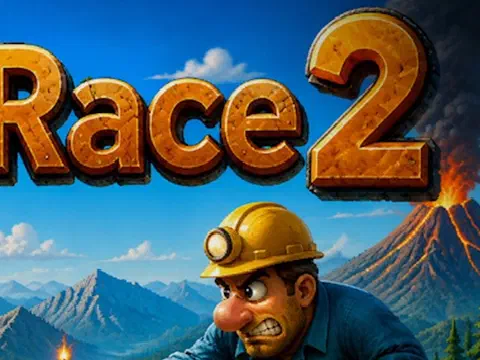
Back in 1997 I wrote CaveRace, a small DOS arcade game about collecting treasure, avoiding monsters, blowing up rocks, and trying not to blow yourself up in the process. Nothing revolutionary, just a fun little game made with the tools we had at the time. Over the years it lived on different computers, went through a DirectX rewrite, eventually made its way to Windows Phone, and then quietly disappeared. I never really forgot about it, though, and this year I sat down to answer a simple question: could I rebuild CaveRace today as if starting from scratch, while keeping the original gameplay completely intact? The answer became CaveRace 1.5.

The Commodore 64 Ultimate Arrived

The box arrived today, just in time before the holidays, sitting on my doorstep like a time capsule. The moment I saw the familiar Commodore logo on the packaging, I had to pause. It wasn’t just another retro gadget. It was the Commodore 64. Or at least, as close as we’re ever going to get in 2025.

I tore open the cardboard (carefully, because let’s be honest, I’ll probably keep the box) and there it was: the Commodore 64 Ultimate, in all its beige glory. The weight of it, the shape, even the slight texture of the plastic, it all felt right. Like holding a piece of my childhood again.

Commodore

A personal history in a few very nerdy chapters

Pac-Man

The first “computer” that really knocked on my brain wasn’t even called a computer. It was an Atari 2600 with those giant wood-paneled vibes, a plastic spaceship parked under a living-room TV. Somewhere far from home (friends of my parents), the kind of visit where adults drink coffee forever, I met Pac-Man and the notorious E.T. They weren’t just games, they were a portal. The graphics were blocky miracles, the sound was pure electricity, and my head did that little swivel where a new obsession clicks into place. I didn’t own one. I barely got to touch it. But the idea got in. That was enough.

Upgrading my Amiga 1200 in the year 2020

I learned all my basic computer and programming skills on Commodore computers, like the C64, Amiga 500, and 1200. Twenty-eight years ago, I upgraded my Amiga 1200 with a faster processor (Motorola 68030) and extra memory (4 megabytes). I also added an FPU (Motorola 68882), a realtime clock, and an internal hard disk (120 megabytes), which is still working correctly in 2020 (wow). At that time, this was a fast Amiga.

CaveRace: From a 1997 DOS Game to a Modern Rewrite

CaveRace began in 1997 as a maze-based action game I created with a group of fellow students. We were inspired by Dyna Blaster (Bomberman), a game I loved playing on my Commodore Amiga.

Almost thirty years later, I returned to Eldora and rebuilt CaveRace for modern computers. CaveRace 1.5.1 keeps the original levels, pixel art, bombs, treasure, and aliens, but now runs natively on Windows and macOS with music, sound effects, controller support, and a new story presentation.